Marias Pass
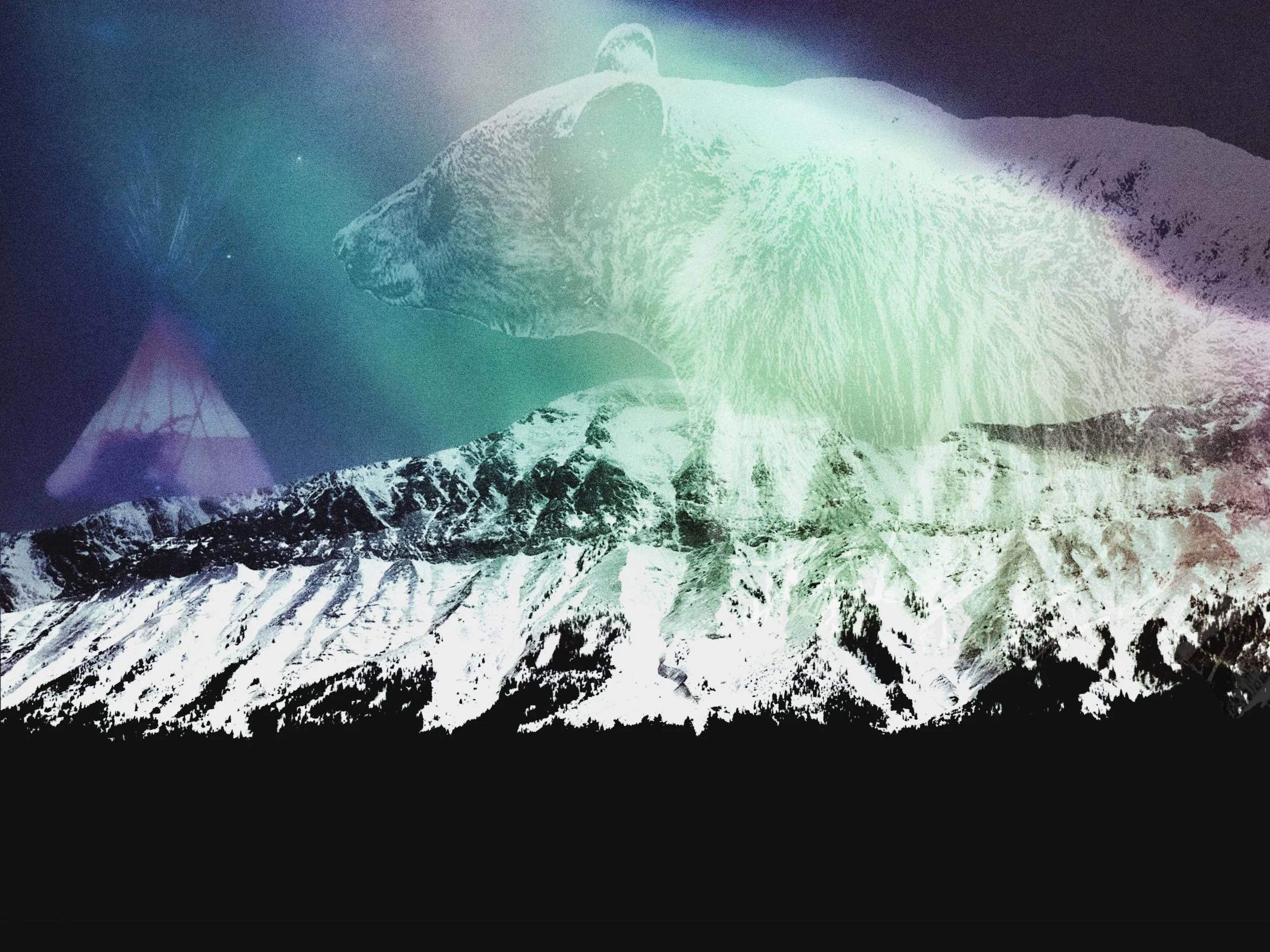
A double-exposure image bringing together the present-day winter landscape with elements drawn from Blackfeet story and knowledge. Northern lights, a bear, and a tipi appear within the sky, reflecting teachings and cultural presence that remain held in the mountains. The layered imagery places past and present in the same space, emphasizing continuity and how traditional knowledge exists within the land alongside contemporary life, rather than apart from it.
The Pikuni refers to Maria's Pass and River as Bear River and Bear Pass. The word itself in Pikuni is Kyi-Yi-Si-Sah-Tah (bear\enemy river). For a more literal translation, this word is literally rendered as "enemy". The bears were the primary enemy to the Pikuni before colonization. The pass was known as Bear Pass, The Big Gap, and later as Two Medicine Pass (because the South Fork flows from this area). This pass may look like an easy thoroughfare across the Rockies, but don’t let it fool you. In winter and sometimes summer, the pass can be very dangerous with several feet of snow, complete whiteout blizzards, animals, and old oddities. The story for this pass concerns the latter, an ancient bear spirit that haunts and hunts within it. It has been told to me by family growing up, but has also been documented by Governor Isaac Stevens, who heard it from Little Dog.
Long ago, there was an enemy to the Blackfeet who had gotten into a fight with the Pikuni in the modern Marias Pass area. This enemy fought bravely, and the Pikuni who were fighting this enemy mentioned that his power came from a grizzly. He was the last enemy standing, and even the Blackfeet were wary of fighting him in close combat. A brave warrior then went and killed the enemy, and he fell down the hill and into some brush. They all saw him die, and when they went to find his body, there wasn’t a body to be found, just bear tracks. From then on, people talk about an old grizzly that terrorizes camps and scares anyone who camps near a particular area in the pass. The Pikuni knew this sight because of a big, disfigured tree, so they knew not to camp around that area. The story varies throughout history, but the main facts are the Ghost Bear and the general location in the pass.
In 1805, Meriwether Lewis explored independently with half of the Corps of Discovery during their return home. He had used the Bear River and followed it so far up toward the Rockies. He named this river Maria’s River after his cousin/fiancée, Maria Wood. Some say he even saw the pass from afar, but was never able to confirm it or travel close enough. A group of young Pikuni boys discovered Lewis and his group, whom Lewis had mistaken for adult men. It is said in the Blackfeet community that the children believed they had won some horses and a gun the night before, but Lewis and his men mistakenly believed the children were stealing. So a fight occurred, and Lewis and his men gunned down some of the young kids. The fathers of the young boys pursued these enemies but lost their trail at the rivers. This side of the story is often omitted in modern accounts of Lewis and Clark. Descendants of the surviving young men still live in the Blackfeet community today and have passed down this story in their families.
— As told to me by my grandfather.