Wild Goose Island
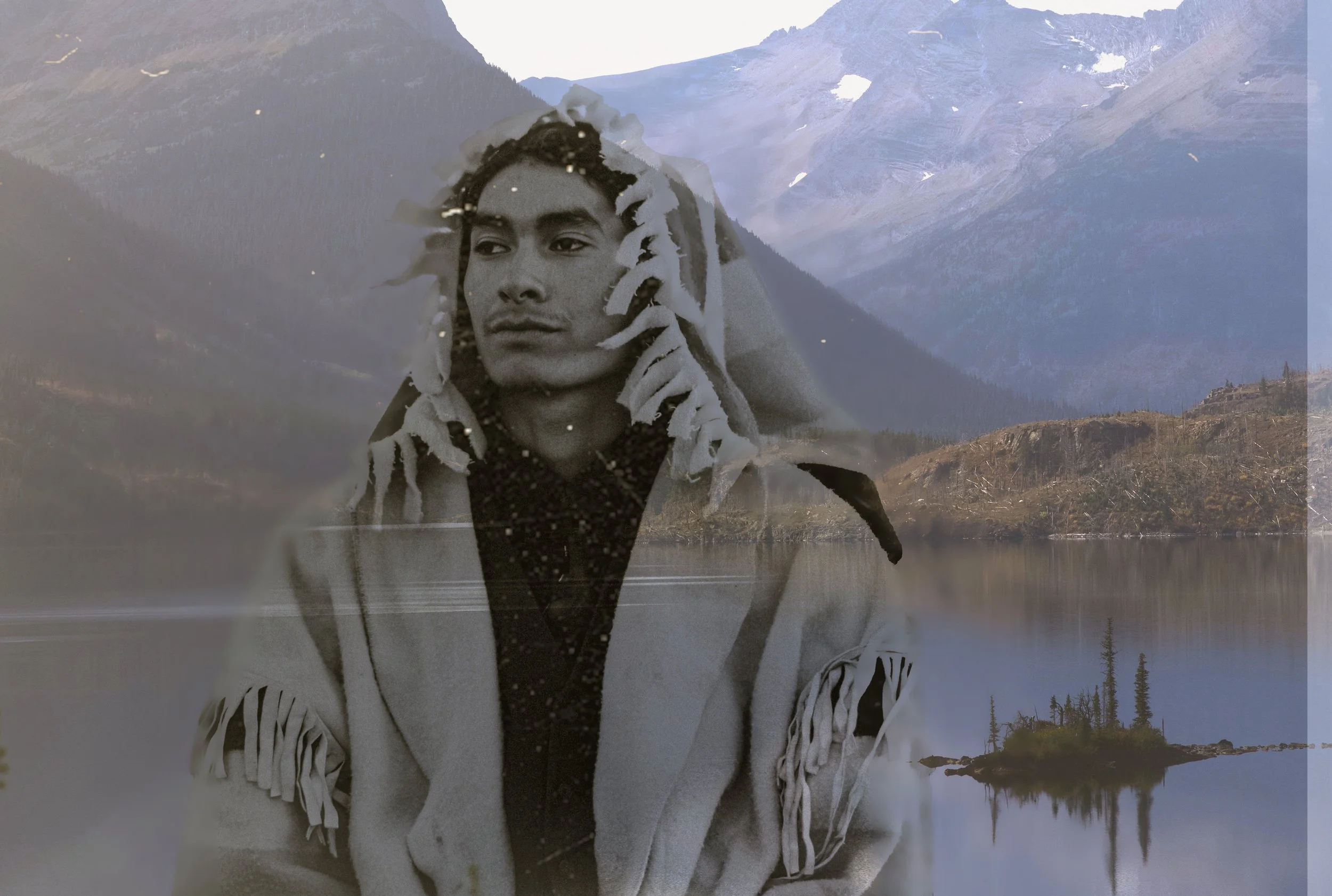
Wild Goose Island, Montana.
This double-exposure image layers a Blackfeet man in ceremonial regalia with the contemporary landscape of Wild Goose Island, once known as Holy Person Island. The image reflects how original place names and their teachings are rooted in cultural and spiritual understanding, and how they continue to exist within the land alongside modern naming and use.
The Wild Goose Island is probably one of the more picturesque sights in the Glacier National Park. Almost everyone who passes through Going To The Sun Road takes pictures and videos of this little island. The island itself is no larger than a modern car, with trees on top that give it a distinctive appearance. The Blackfeet refer to this island as Natos-aaBee (Holy Person). The rationale for this name among the Blackfeet is lost due to the overhearing of a love story on Wild Goose Island. The Pikuni people possess extensive ancient knowledge of the surrounding areas. The mountains, lakes, waterfalls, and rock formations all had names and oral histories. But due to “Discovery” and colonization, many of these places have lost their original names and stories.
The story of Wild Goose Island is considered folklore and is a compelling love story. It goes that two tribes lived by this lake, possibly Pikuni and Kootney. One day a young man was swimming and he saw a beautiful lady of the other tribe swimming on the island. He goes and introduces himself, and they instantly fall in love. When they leave and plan to meet the next day, they tell their families. Their families were very upset and told them they are to not see each other again. The next day, the young couple escaped and met on the island, followed by their people chasing them. When they met on the island, the creator/god recognized their love for each other and turned them both into geese. So when their people went out to bring them back home, all they found were two geese on the island.
Many of the stories most commonly told about this land are romanticized, shaped by later arrivals who reframed its history for their own purposes. In contrast, traditional Pikuni place names and stories are straightforward and rooted in lived experience, offering a more honest understanding of the land.