Judith Gap
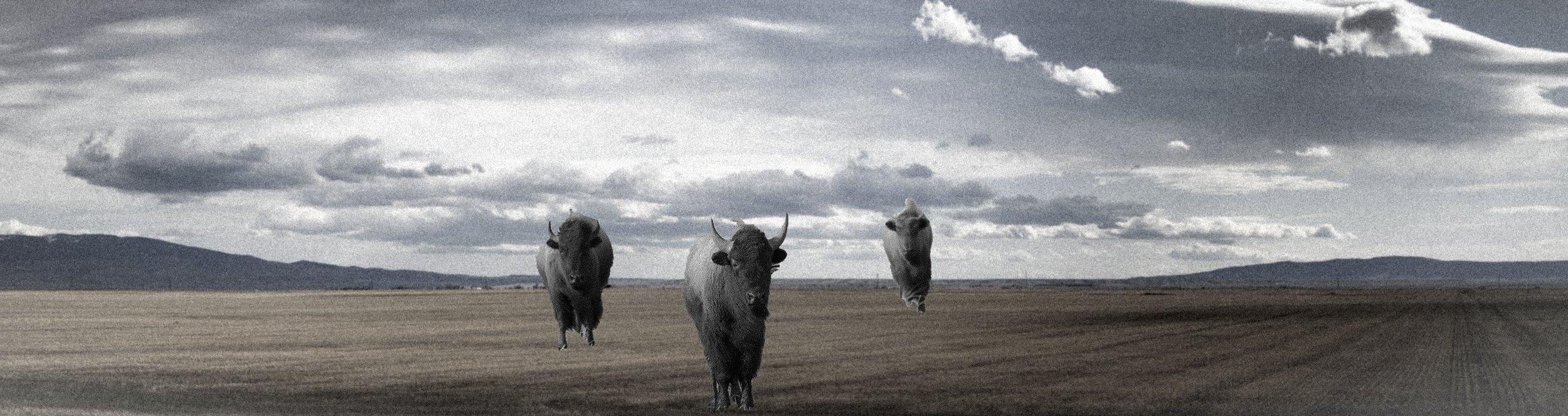
Buffalo double exposure, Judith Gap, Montana
The history of this area was told to me by my grandfather, George G. Kipp III. I used to travel everywhere with my grandparents, and I would always ask questions about the Pikuni culture, language, history, and land. Every year, we would travel to Billings, MT, to sell our calves in the fall and our cows throughout the rest of the year. Growing up, my grandpa made it a point to tell the same story or history of a place every single time, no matter how many times we had driven past it. And it never bored me like it would my aunties and uncles. I would listen and question things as if it were my first time hearing these tales. I think that's why I wanted to make a project like this, because I’ve noticed a significant change in people's attention spans today.
While on these trips, my grandpa GG would tell me stories and the history of the Judith Gap. He would always talk about this area specifically because it was crucial to the Pikuni people, who relied on buffalo for their primary diet, clothing, and shelter. The mountain front of the Judith gap is Istsi-poh-tsi-Ee-stuck-que, which translates to “mountains coming from both sides.” Because of this mountain front formation, it creates what GG would say “A natural funnel” for the buffalo to come from the southeast to graze on the great plains in Montana. Bands of Pikuni would come from across modern-day Montana, leaving their winter camps to establish hunting camps with family and friends from other bands. They would then scout buffalo herds, usually of small numbers, and follow them. They would then utilize the vast buffalo jumps in the surrounding areas to harvest what they needed to survive.
When looking at the mountain fronts around the Judith Gap, one can see that it is a natural and abundant hunting ground for the Pikuni, wolves, and bears. The Beauty of this area used to be amazing. There were beautiful grasslands, game-rich mountains, clean water streams, and hot springs. Along the Little Belt Mountains, there was a nice hot spring spot that used to be a must-see for the Pikuni.
— As told by Shawn Heavyrunner Jr., as was told to him by his grandpa GG Kipp III.