St. Mary River
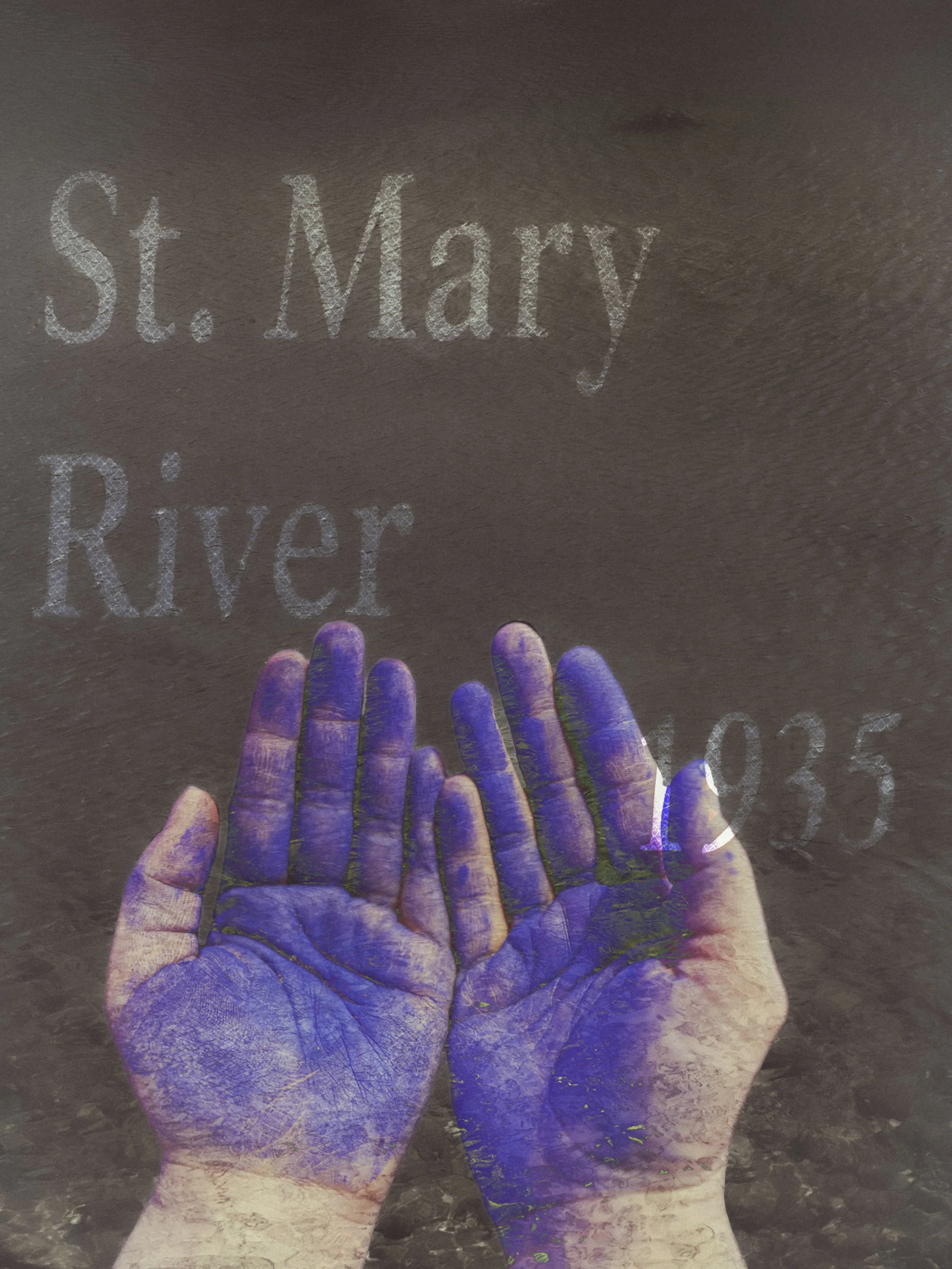
Blue Paint River
My grandmother, Melinda Bullshoe-Kipp, would tell me about this river and the beautiful, colored blue paint that was gathered here. The name for this river is Oozkoi-sis-sah-tah (blue river). It’s the river that connects the upper and lower St. Mary’s lakes. The Pikuni used this river to gather blue paint for their ceremonial use. There were only a few ways to obtain blue paint; most of the time, it was difficult and nearly impossible before colonization. This river was one of the easier ways to gather this specific paint. Therefore, it became a very well-known area to the Pikuni when they could trek there and camp in the summer months. Many cultural stories in this area tie the Pikuni to it for centuries.
My grandmother would talk about how on the banks of the river, there were beautiful veins of blue paint. It was a color sought after for many ceremonial and artistic reasons. Before the land was changed to Glacier National Park, Pikuni people, especially those who were considered medicine people, would gather here and get their year's worth of paint or get it for a ceremonialist elder as a gift. But now, with the restrictions and persistent problems with gathering in Glacier National Park, we can only see it from afar. The Blackfeet have the traditional right to gather and hunt in the parks of their traditional territory. Still, when those rights are exercised, they become a problem and a headache that deters the Blackfeet from gathering and hunting. Only a brave few exercise these rights today.
Regarding the name Saint Mary, there is considerable speculation about which priest named it after the Virgin Mary. Some say it was Father De Smet around the years of 1842-45, who was a well-known traveling priest. Hugh Monroe recounts this area and talks about this river in his life story, and about his good friend James Willard Schultz. This area is known for its vast wild game and natural vegetation. Also, the views surrounding this area are remarkably beautiful and breathtaking.
— Re-told by Shawn Heavtrunner Jr., as told to him by Melinda Bullshoe-Kipp